
18 November 2026 · By Alistair Greenwood
Why do AI projects fail on the human side?
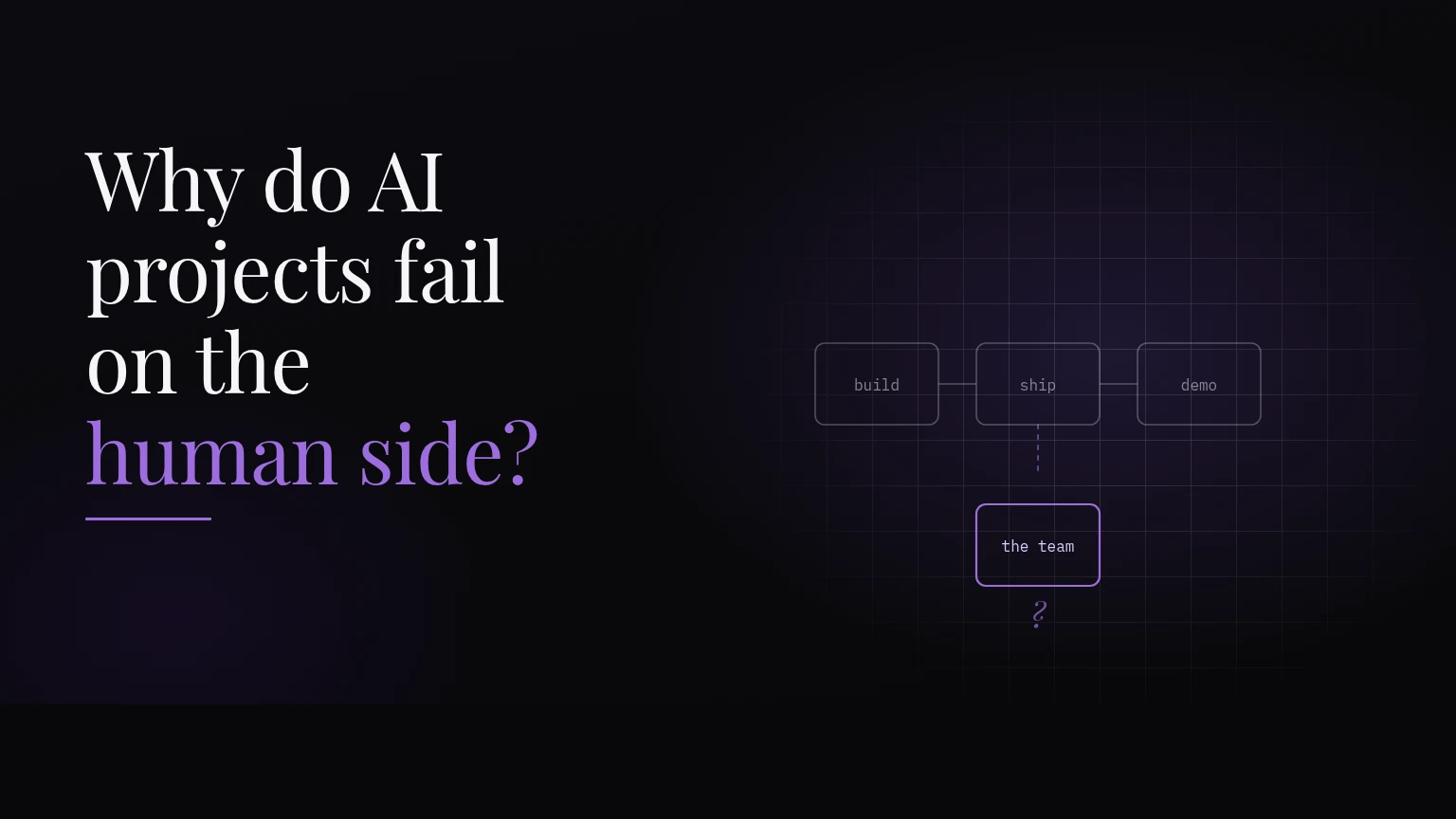
If you’re wondering why an AI project hasn’t stuck in your business, I’d look at the people first, whether they were brought in, and whether anyone asked them to help automate their own job. I’m Alistair Greenwood, I founded OmniforceAI, and the hardest part of my job is the human side, the building is the easier bit.
The shiny system
I say that because I got it wrong myself. On an earlier project we built the whole thing in one go, a really cool shiny system, and showed it to the staff. Their reaction was basically, well, I’ve been doing this for 20 years my way. That crazy thing is over there and I’m not interested. And then someone asked, why am I going to help you automate me?
To be fair to them, that’s a completely reasonable thing to ask, and we didn’t have a decent answer, because we’d spent pretty much all our time on the build. I thought if we made something good enough, people would use it, and they weren’t interested.
Since then we do one initiative at a time and get buy-in at every level, from whoever signs it off and from the people who’ll be using it every day. I’d make sure that second conversation happens early. If someone on the team is sat there thinking, why am I going to help you automate me, you want that out in the open, with a real answer for them.
I don’t have a tidy script for that conversation. I just want it to happen before the build, while there’s still time to change course. Doing one initiative a month also helps, because it doesn’t arrive as this huge finished thing nobody asked for.
The building is the easy bit
I’ve said this on calls a few times now, and I still mean it: the hardest part of my job is the human side, like the building side and the processing side is really easy, but it’s getting the adoption internally. That earlier project is a big part of why I think that.
I tend to treat AI like a new joiner. Just like you wouldn’t say to a new starter, why aren’t you doing this yet, you give it a bit of time to bed in and get better. That part is easy to skip when you’re excited about the build.
The people are still the North Star in all of this. They set the direction and they check what comes out. The AI can take the repetitive bit off their plate, but it can’t do the judging for them.
What 20 or 30 years actually gives you
I was talking to some senior partners about AI and junior jobs, and the thing I kept coming back to is this. The tools don’t have that element that they have, which is 20, 30 years of actually doing it and knowing the right answers.
That’s the bit I wouldn’t try to automate away. The judgement, the sense of what good looks like, the knowledge of when a number feels off. You can build a very clever system and still need the person who knows whether the answer is any good. When the conversation turns to junior roles, I think about that a lot, because the years of doing the work are exactly what the tools are missing.
These days what we try to do is combine that knowledge with the agents. The people stay close to the work, and the system takes the repetitive bit. I haven’t got a perfect version of that yet, but that’s the direction.
I started OmniforceAI as me and basically a team of agents, trying to see if you could build a solo billion dollar business. What was started as a solo journey actually ended up bringing me closer to people. Our AI engineer looked at what the agents had been doing and found it wasn’t even plugged in, and had it fixed in two days. Our project manager rebuilt how we deliver, and we’ve been two weeks ahead ever since. I needed people who knew the domain, and I needed people who could tell me when something wasn’t actually finished.
So when an AI project has stalled, I start by asking who was in the room when it was designed, and whether the people with 20 years of doing the job had any reason to help.
What I’d do differently
If I were starting a project in your business tomorrow, I’d pick one initiative and I’d talk to the people who do that work before anyone built anything. I’d want them to say what would actually help, and I’d want a straight answer to that question, why would I help you automate me.
Sometimes the honest answer is that the job gets less grinding, and they get to spend their time on the part they’re actually good at. If we haven’t thought about them at all, that’s useful to find out before you spend the money.
I’m still working a lot of this out, to be honest, and I expect the way we handle the human side will keep changing as we learn.
A few questions I get a lot
Why do AI projects fail on the human side?
Because the people who have to use the system often weren’t brought in, or couldn’t see why they should help. I’ve had staff look at a finished build and say they’d been doing it their way for 20 years, and someone asked, why am I going to help you automate me. The building is the easier part. Adoption is the hard part.
How do you get people to actually use an AI system?
Get buy-in at every level before you build, including the people who’ll use it every day, and do one initiative at a time so it doesn’t arrive as one big shiny thing they had no hand in. Treat it like a new joiner as well, and give it time to bed in. If someone is worried you’re automating their job, you want that said out loud early.
Does AI replace the experts in a business?
I don’t think it replaces the 20 or 30 years of actually doing the work and knowing the right answers. That judgement is what the tools don’t have. The way I see it, the people stay the North Star, they set the direction and check what comes out, and the AI takes the repetitive work off their plate.
Is the technology usually the problem?
In my experience the technology is the part we can fix. The hardest part of my job is the human side, getting adoption internally. If a project has stalled, I’d look there first.
I write on Substack. There’s more on AI consulting on this site, and more about me and what I do on my About page. If it’d help to jump on a call about a project that’s stalled, just give me a shout, or you can try our AI-readiness assessment first.
Cheers, Alistair
By Alistair Greenwood. About Alistair Greenwood.